When considering an upgrade for your concrete surfaces, whether it's a garage, basement, patio, or driveway, understanding the various concrete coating finish options available is crucial. The right finish not only enhances the aesthetic appeal of your space but also provides essential protection and durability against wear, chemicals, and the elements. With so many choices, from functional and slip-resistant textures to high-gloss decorative looks, it can be challenging to determine which option is best suited for your specific needs and style preferences.
This comprehensive guide aims to demystify the world of concrete coatings and finishes. We'll explore common questions and provide insights into the different types of coatings, popular finish styles, and practical considerations to help you make an informed decision for your Indiana or Kentucky property. Let's dive in and uncover the possibilities for transforming your concrete surfaces into beautiful, resilient, and long-lasting assets.
What type of concrete coating is best?
Determining the “best” type of concrete coating largely depends on the specific application, desired aesthetic, and environmental factors of your space. There isn't a single universal best option, as each coating type offers unique advantages.
Generally, the most popular and effective concrete coatings fall into a few key categories:
- Epoxy Coatings: Known for their hardness and chemical resistance, epoxy coatings are a traditional choice for garages, basements, and industrial floors. They offer a strong, durable surface that can withstand heavy traffic and spills. However, standard epoxy can be susceptible to UV damage, leading to yellowing or chalking when exposed to sunlight, making it less ideal for outdoor applications unless specifically formulated for UV stability.
- Polyurea Coatings: Polyurea is a highly flexible and extremely durable coating material. It's known for its rapid cure time, allowing for quicker project completion, and its excellent resistance to abrasions, chemicals, and impact. Polyurea is also much more flexible than epoxy, meaning it's less prone to cracking from concrete movement. Its superior UV stability makes it an excellent choice for both indoor and outdoor applications, including patios, pool decks, and driveways.
- Polyaspartic Coatings: Often considered a specialized form of polyurea, polyaspartic coatings share many of polyurea's benefits, including fast curing, high durability, and UV stability. They can be applied in a wider range of temperatures, making them versatile for various climates. Polyaspartic coatings are frequently used as topcoats over epoxy or polyurea systems to enhance gloss, scratch resistance, and longevity.
For most residential and light commercial applications, especially in areas like garages, basements, patios, and pool decks, a high-quality polyurea or polyaspartic system often provides the best balance of durability, aesthetic appeal, and long-term performance. These systems offer superior resistance to hot tire pickup, chemicals, and UV degradation compared to traditional epoxies. ICON Concrete Coatings specializes in advanced polyurea and polyaspartic systems, ensuring you receive a premium, long-lasting solution tailored to your specific needs.
What are the 6 types of concrete finishes?
When we talk about concrete finishes, we can refer to both the texture and appearance of raw concrete, as well as the decorative and protective finishes applied on top. Here are 6 common types of concrete finishes, encompassing both traditional concrete treatments and popular coating styles:
- Smooth/Troweled Finish: This is achieved by using a trowel to create a flat, dense, and very smooth surface. It's often seen in interior floors like basements or garages before a coating is applied, providing a sleek, modern look.
- Broom Finish: Created by dragging a broom across freshly poured concrete, this finish leaves a textured, non-slip surface. It's highly practical for outdoor areas like driveways, walkways, and patios where slip resistance is crucial, especially in wet conditions.
- Stamped Concrete: This decorative technique involves pressing molds into wet concrete to mimic the appearance of natural stone, brick, wood, or other patterns. It's a popular choice for patios, pool decks, and walkways, offering high aesthetic appeal and customization.
- Exposed Aggregate Finish: With this finish, the top layer of cement paste is removed to reveal the decorative aggregates (stones, pebbles, or shells) embedded within the concrete. It offers a unique, natural, and often textured look, ideal for outdoor spaces.
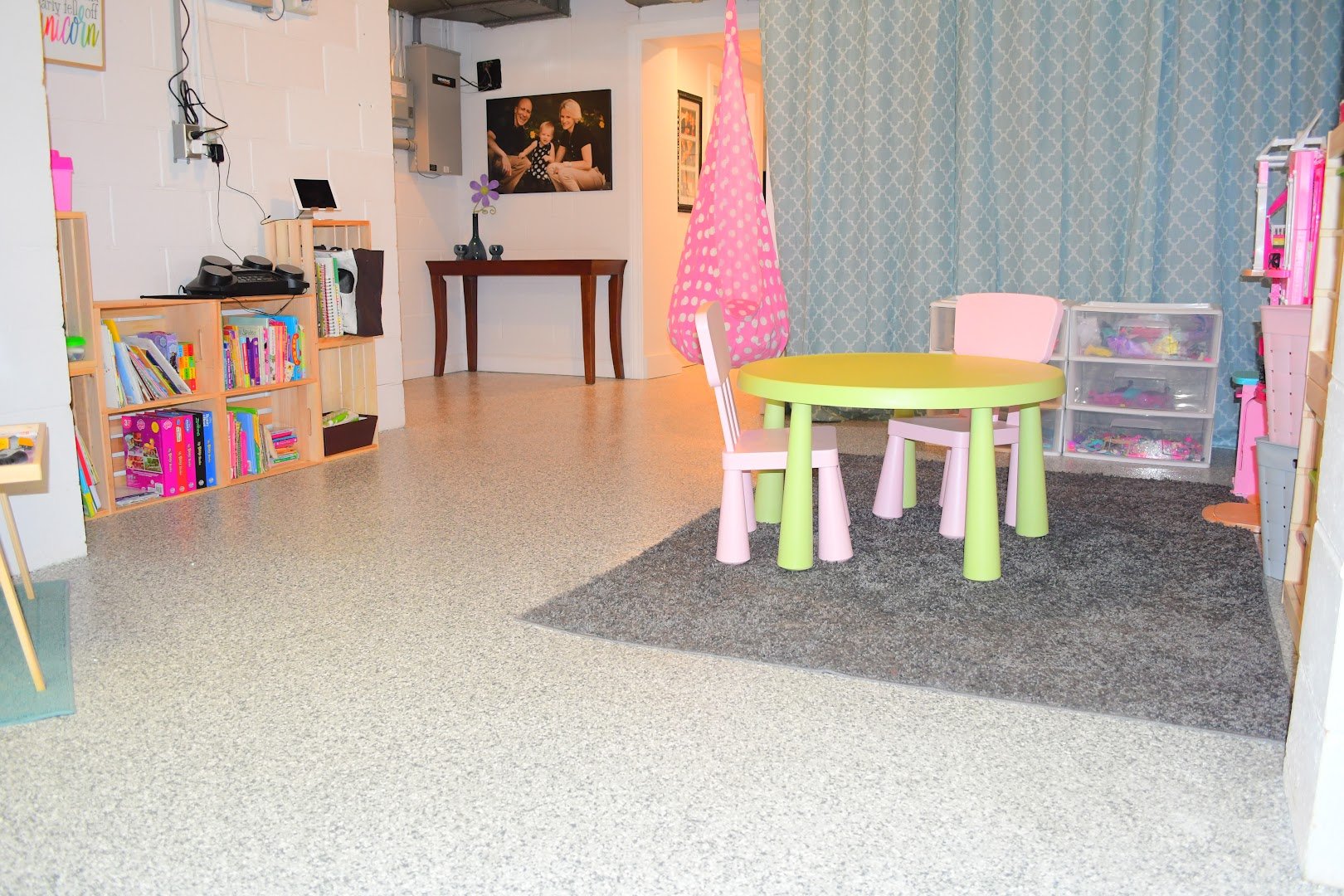
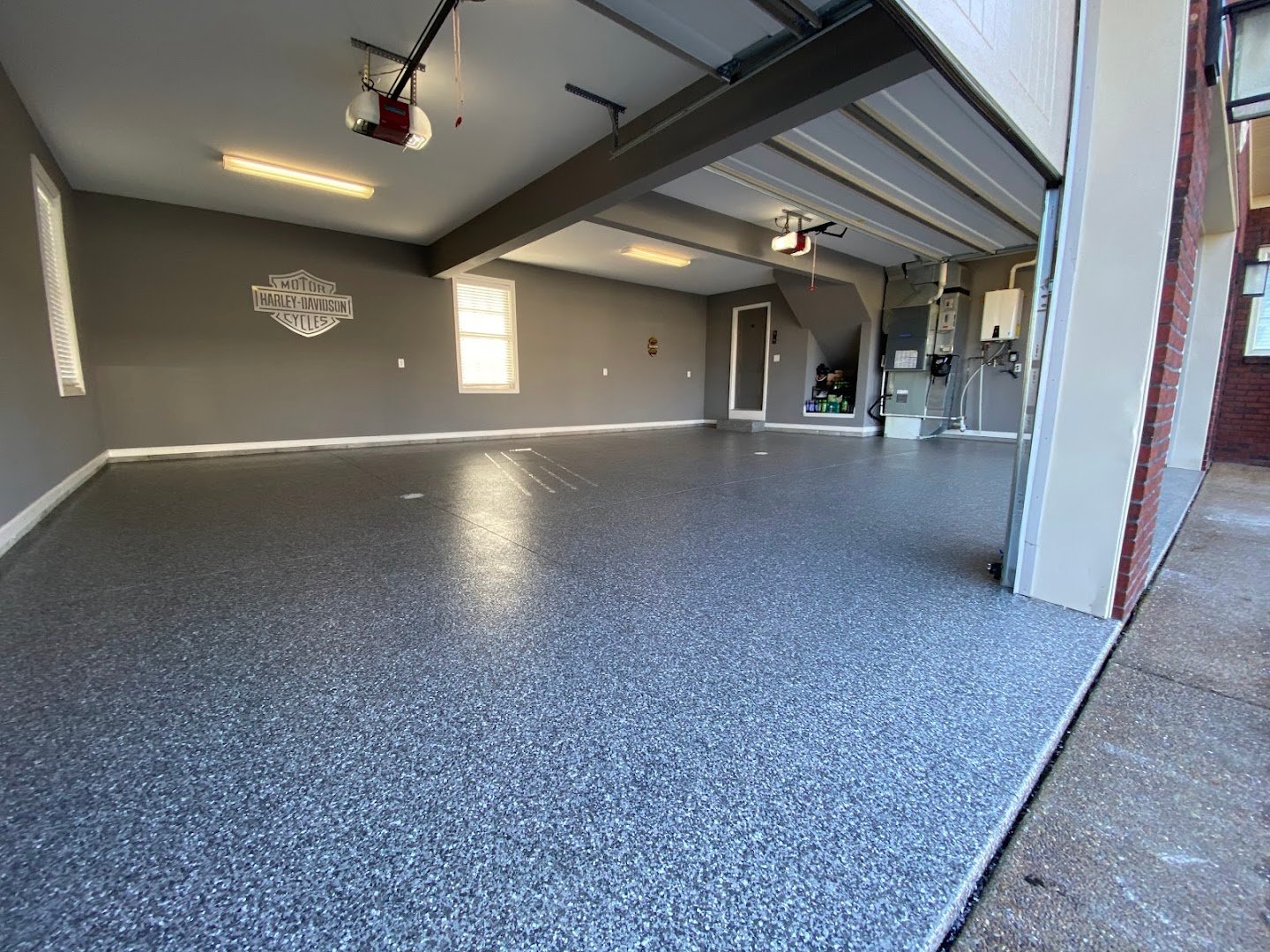
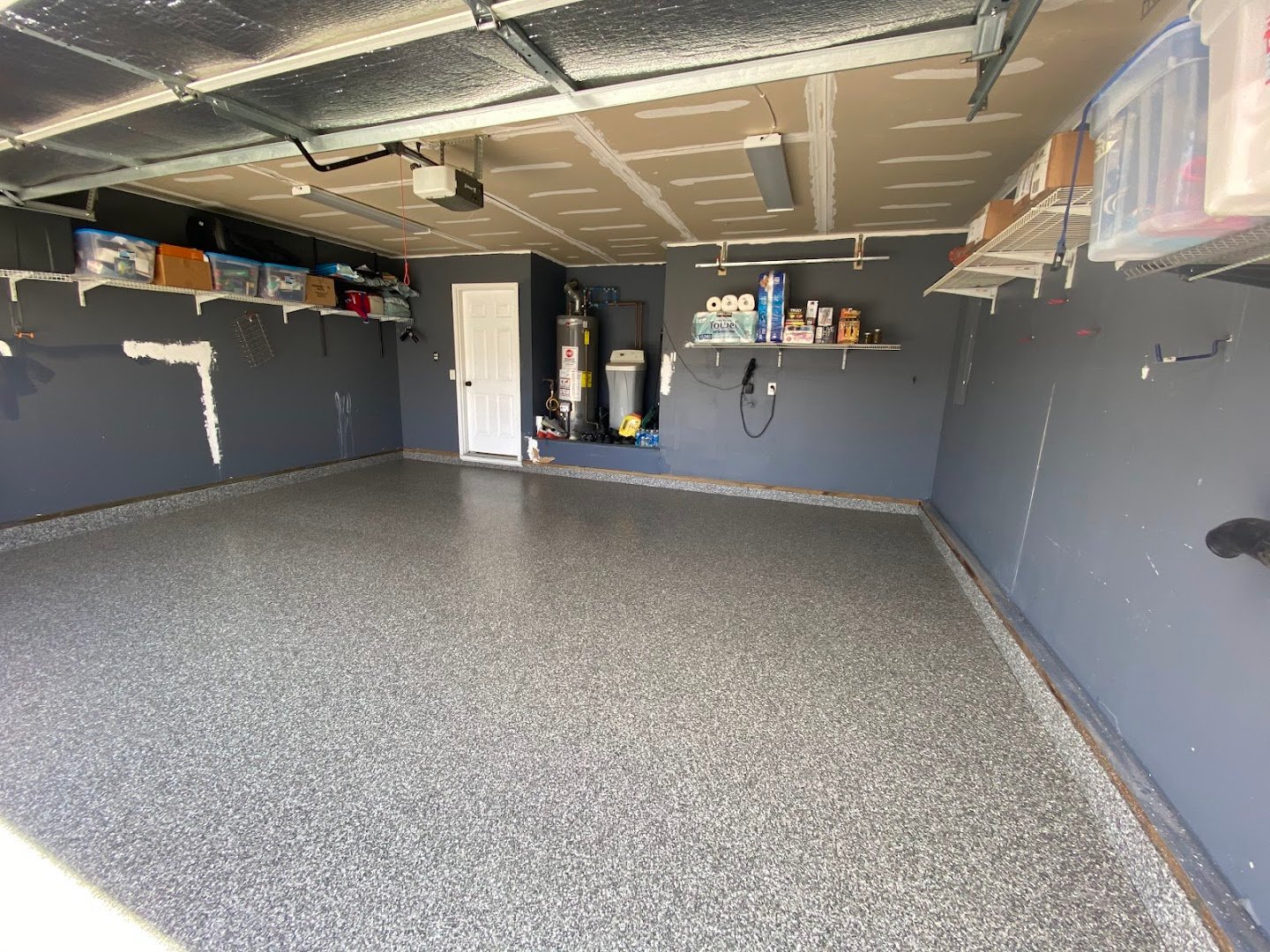
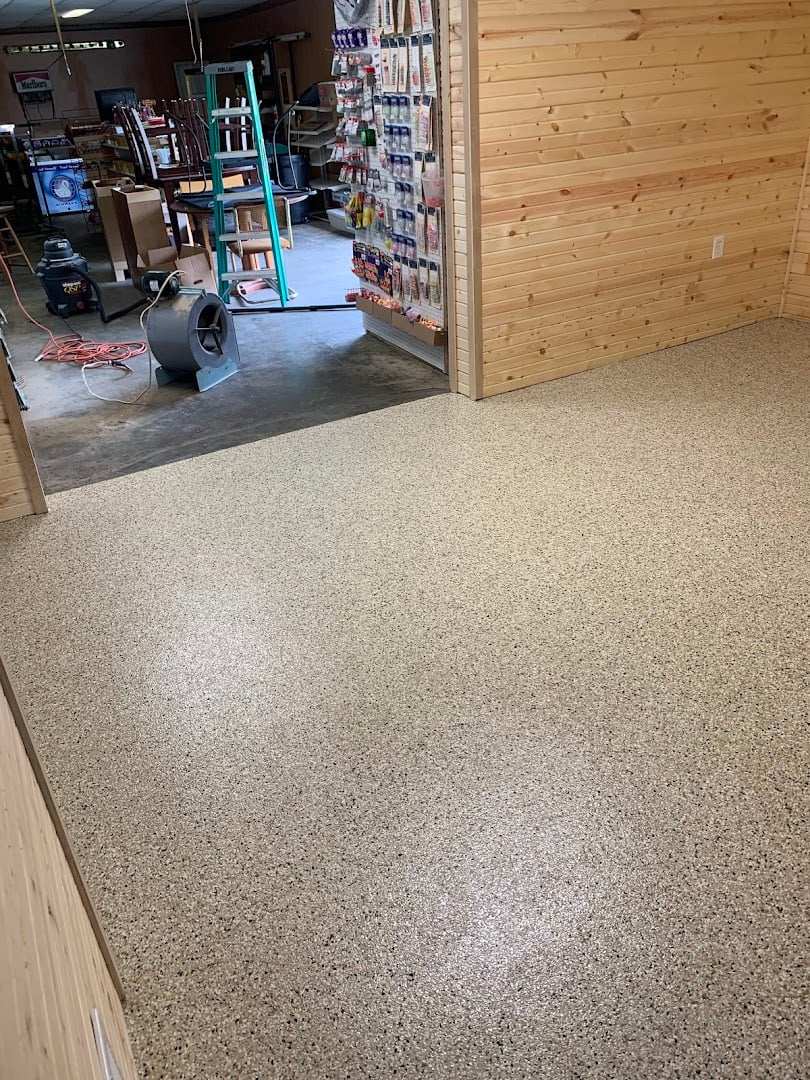
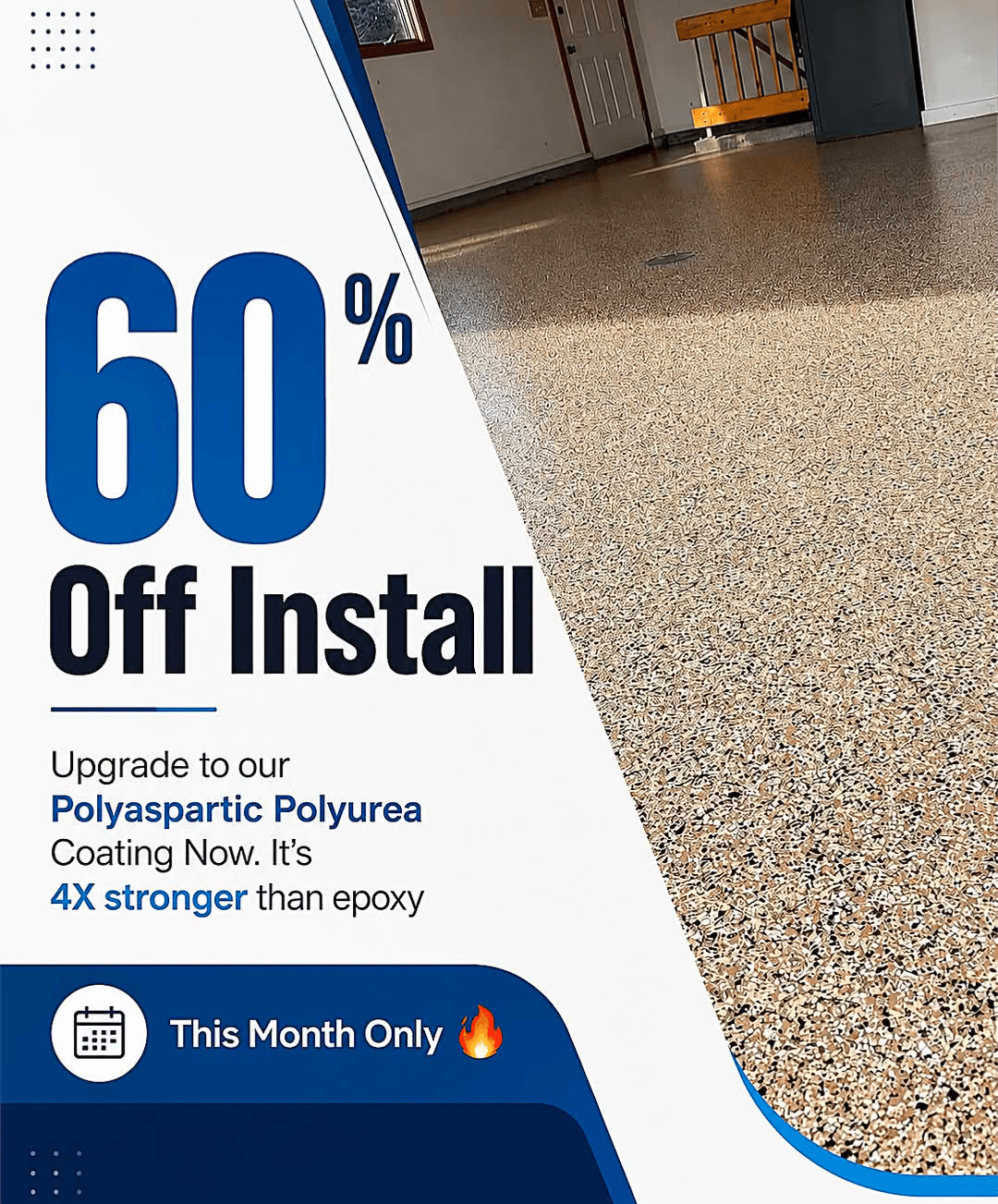
- Flake/Chip System Finish: This is a popular concrete coating finish, particularly for garages and basements. Decorative vinyl flakes (chips) are broadcast into a wet base coat (often epoxy or polyurea) and then sealed with a clear topcoat. This creates a multi-colored, textured, and highly durable surface that hides imperfections and offers excellent slip resistance.
- Solid Color or Metallic Finish: Achieved through specialized concrete coatings like epoxy, polyurea, or polyaspartic, these finishes offer a vast palette of colors, from subtle grays to vibrant hues. Metallic finishes incorporate metallic pigments into the coating, creating a unique, three-dimensional, marbling effect that is highly customizable and often used in showrooms or modern residential spaces.
Each of these finishes offers distinct visual and functional benefits, allowing for a wide range of design possibilities for any concrete surface.
What is poor man's concrete?
The term “poor man's concrete” is often used colloquially to describe a very basic, often unreinforced, or low-quality concrete slab. It typically refers to a concrete installation done with minimal materials, labor, and preparation, prioritizing the lowest possible upfront cost over longevity, durability, or structural integrity.
Characteristics of what might be considered “poor man's concrete” could include:
- Lack of Reinforcement: Omitting rebar or wire mesh, which are crucial for concrete's tensile strength and crack prevention.
- Thin Slab Thickness: Pouring a slab that is thinner than recommended for its intended use, making it prone to cracking and breaking under stress.
- Inadequate Sub-Base Preparation: Pouring concrete directly onto unprepared soil without proper compaction, grading, or a gravel base, leading to uneven settling and cracking.
- Low-Quality Mix: Using a concrete mix with a lower cement content or improper aggregate ratios, resulting in weaker concrete.
- Poor Curing Practices: Not properly curing the concrete, which is essential for it to achieve its full strength and durability.
While such an approach might save money initially, it almost invariably leads to significant problems down the line, including extensive cracking, spalling, uneven surfaces, and a much shorter lifespan. These issues often require costly repairs or complete replacement, making the initial savings negligible compared to the long-term expense and frustration.
Investing in properly installed, high-quality concrete, and then protecting it with professional-grade coatings, is always the more cost-effective and sustainable solution in the long run. Quality concrete and coatings provide superior durability, performance, and aesthetic appeal, saving you from the headaches and expenses associated with a “poor man's” approach.
Can you put a thin coat of concrete over existing concrete?
Yes, you absolutely can put a thin coat of concrete over existing concrete. This process is commonly known as concrete resurfacing or applying a concrete overlay. It's a popular and effective method for revitalizing old, worn, or slightly damaged concrete surfaces without the need for complete demolition and replacement.
Concrete overlays are typically polymer-modified cementitious products, meaning they combine cement with special polymers that enhance their bonding strength, flexibility, and durability. These overlays can be applied in very thin layers, often ranging from 1/16th of an inch to a few inches thick, depending on the product and desired finish.
The success of applying a thin coat of concrete over existing concrete hinges on several critical factors:
- Surface Preparation: This is paramount. The existing concrete must be thoroughly cleaned, free of dirt, grease, oil, and any loose debris. Any cracks or spalling must be repaired. The surface often needs to be profiled (roughened) through grinding or shot blasting to ensure proper adhesion of the overlay.
- Soundness of Existing Concrete: The underlying concrete must be structurally sound. Overlays are not designed to fix major structural issues; they are for aesthetic improvement and surface protection. If the existing concrete has severe cracks, significant settling, or is crumbling, a full replacement might be necessary.
- Bonding Agent: A specialized bonding agent or primer is often applied to the existing concrete surface before the overlay to create a strong, lasting bond between the old and new layers.
- Application Technique: Overlays can be applied by trowel, squeegee, spray, or broom, depending on the desired texture and product type. They can be colored, stamped, or textured to achieve various decorative effects.
Concrete overlays are an excellent solution for patios, pool decks, walkways, and even interior floors that need a facelift. They can transform an unsightly concrete slab into a beautiful, durable surface, offering a cost-effective alternative to full replacement. However, due to the critical nature of surface preparation and application, it's often best to entrust such projects to experienced professionals.
Ready to explore the perfect concrete coating finish options for your Indiana or Kentucky property? Whether you're looking to transform your garage, basement, patio, or driveway, ICON Concrete Coatings offers premium solutions designed for durability and beauty. Our experts are here to guide you through the choices and provide a flawless installation.
Contact ICON Concrete Coatings today for a free quote and let us help you design a durable, beautiful surface that lasts for years to come!