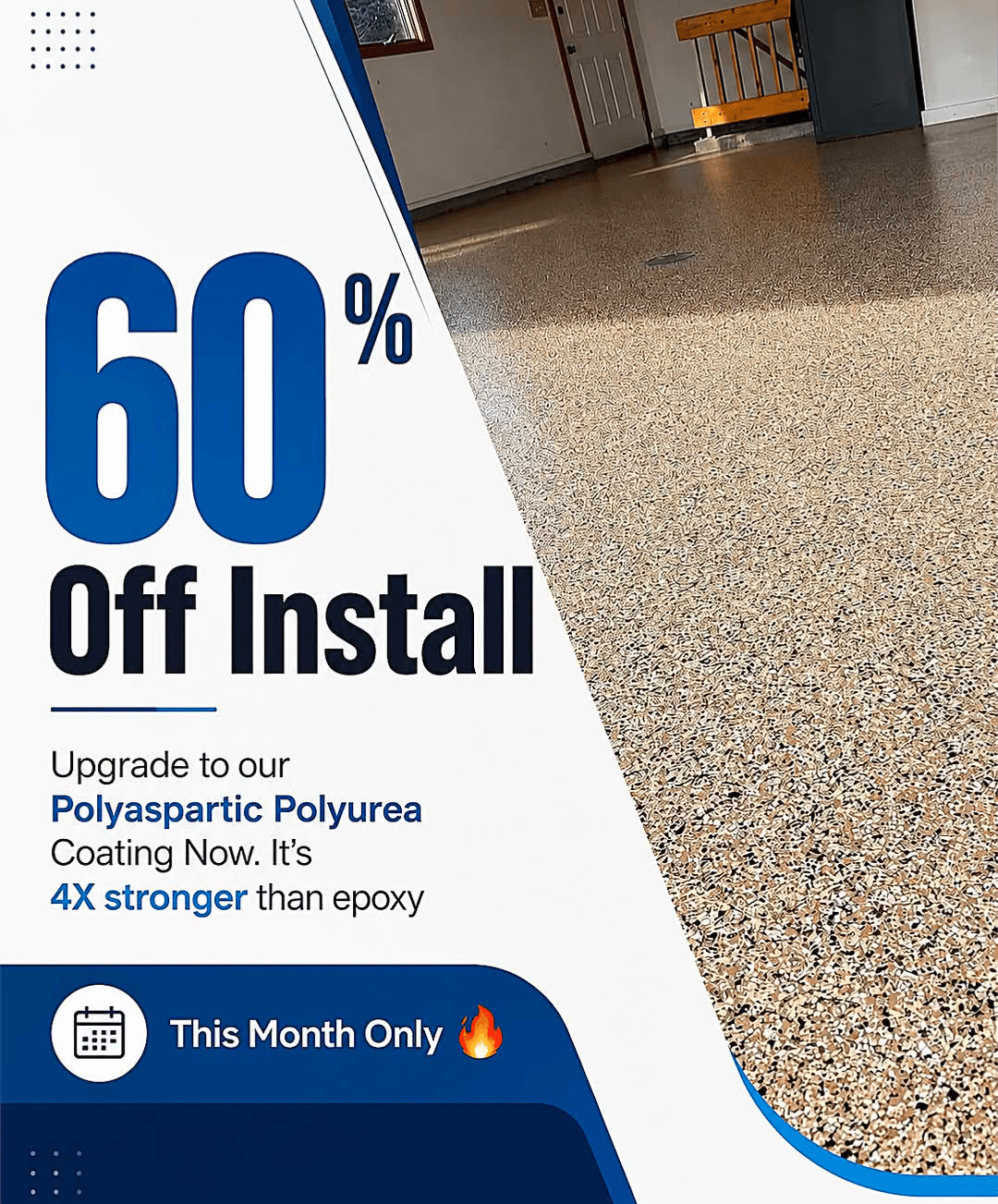
Quick answer: Polyaspartic coatings cure faster (often within 24 hours), resist UV fading, and hold up better to Louisville's temperature swings, while epoxy costs less upfront but takes longer to cure and can yellow over time. Homeowners who want durability and a quick turnaround should choose polyaspartic; those on a tighter budget who don't mind a longer installation window may prefer epoxy.
Key Takeaways
- Polyaspartic coatings cure in as little as 24 hours and resist UV damage, making them ideal for Louisville's humid summers and freezing winters.
- Epoxy garage floor coatings are more affordable initially but require longer cure times and are prone to yellowing when exposed to sunlight.
- The right choice depends on your budget, timeline, and how much wear your garage floor sees.
Choosing a garage floor coating shouldn't feel like guesswork. Yet many Louisville homeowners find themselves stuck comparing two similar-sounding options: polyaspartic and epoxy. Both promise a durable, attractive finish, but the differences between them can significantly affect how your floor performs over the next decade.
This guide breaks down what separates polyaspartic and epoxy garage floor coatings, so you can make a confident decision for your home.
What Is Epoxy Garage Floor Coating?
Epoxy is a two-part resin system that's been the go-to choice for garage floors for decades. It's applied in liquid form, then chemically hardens into a rigid, glossy surface. Epoxy is well-known for its affordability and its ability to hide minor concrete imperfections.
However, epoxy has some notable drawbacks. It typically takes 24 to 72 hours to cure between coats, and full cure time before heavy use can stretch to a week or more. Epoxy is also sensitive to UV light, meaning garages with windows or those exposed to sunlight may see the coating turn yellow or amber over time.
What Is Polyaspartic Garage Floor Coating?
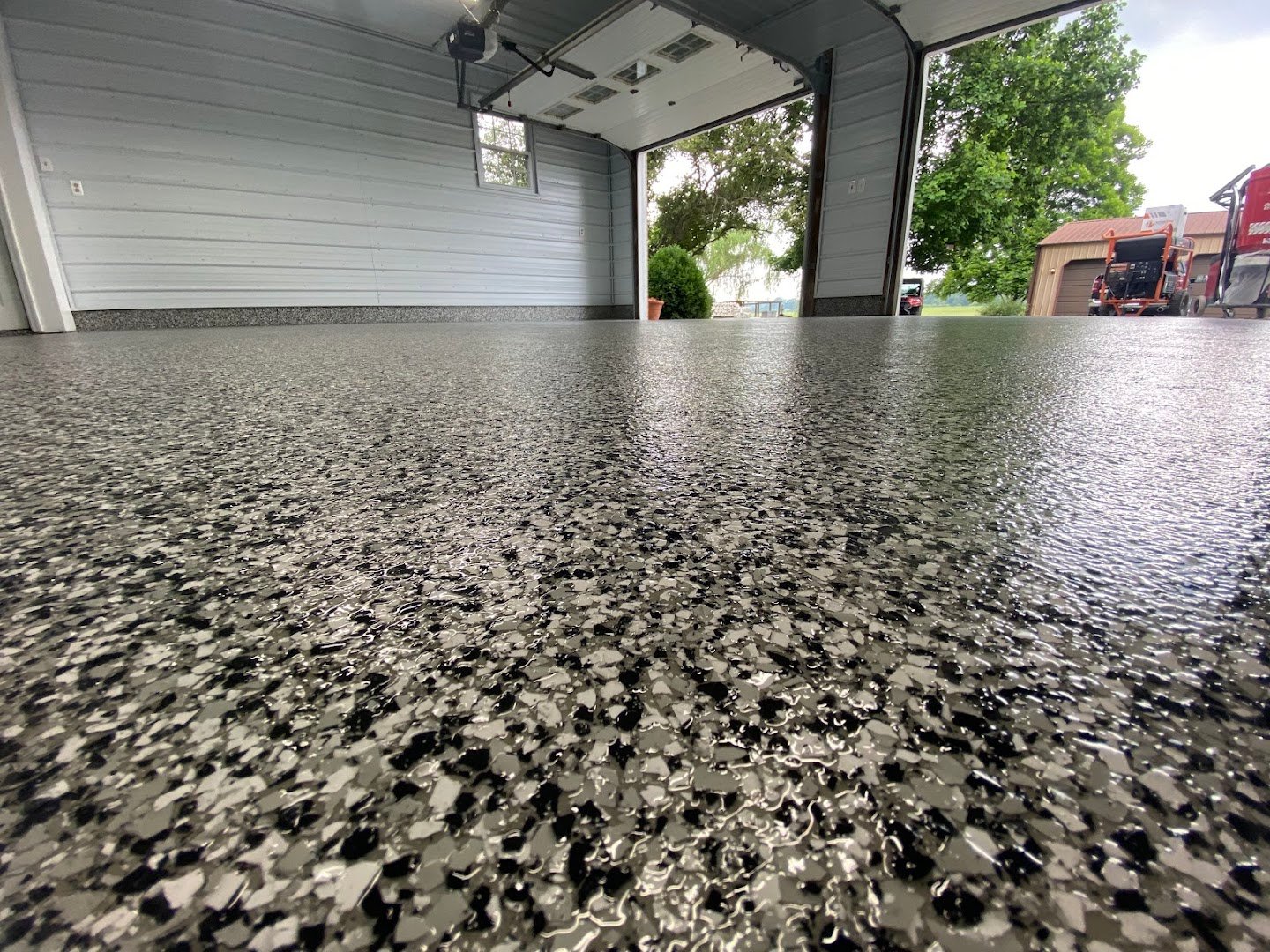
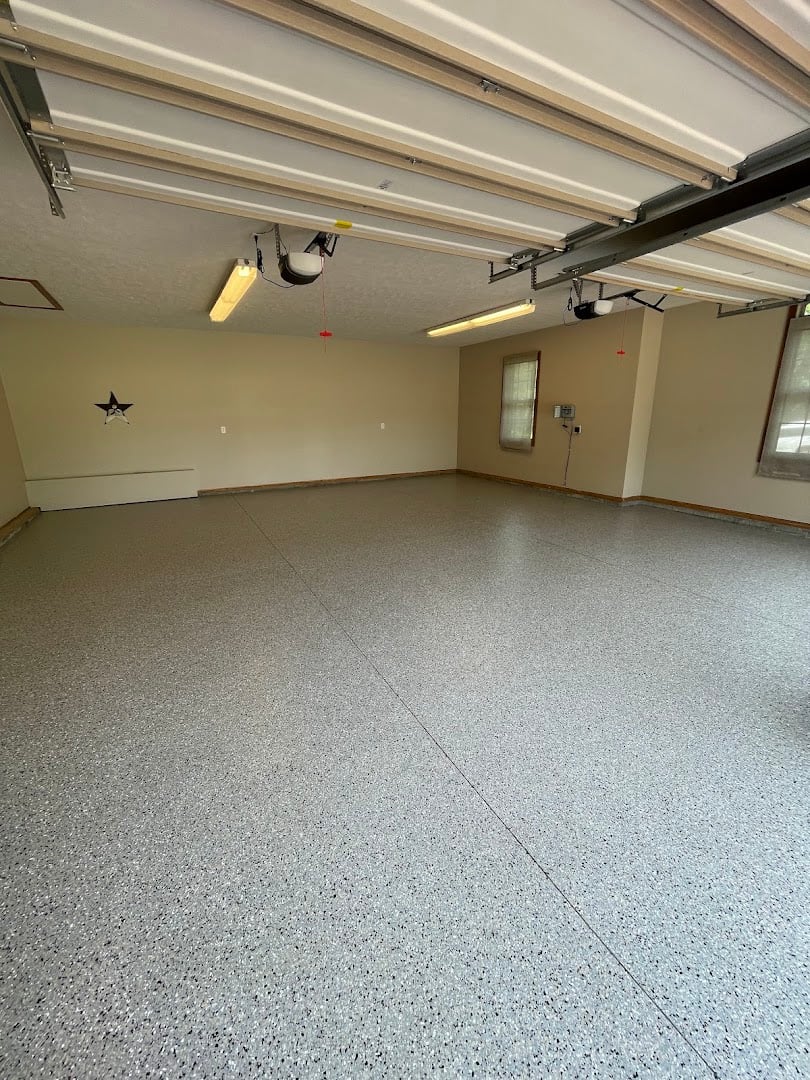
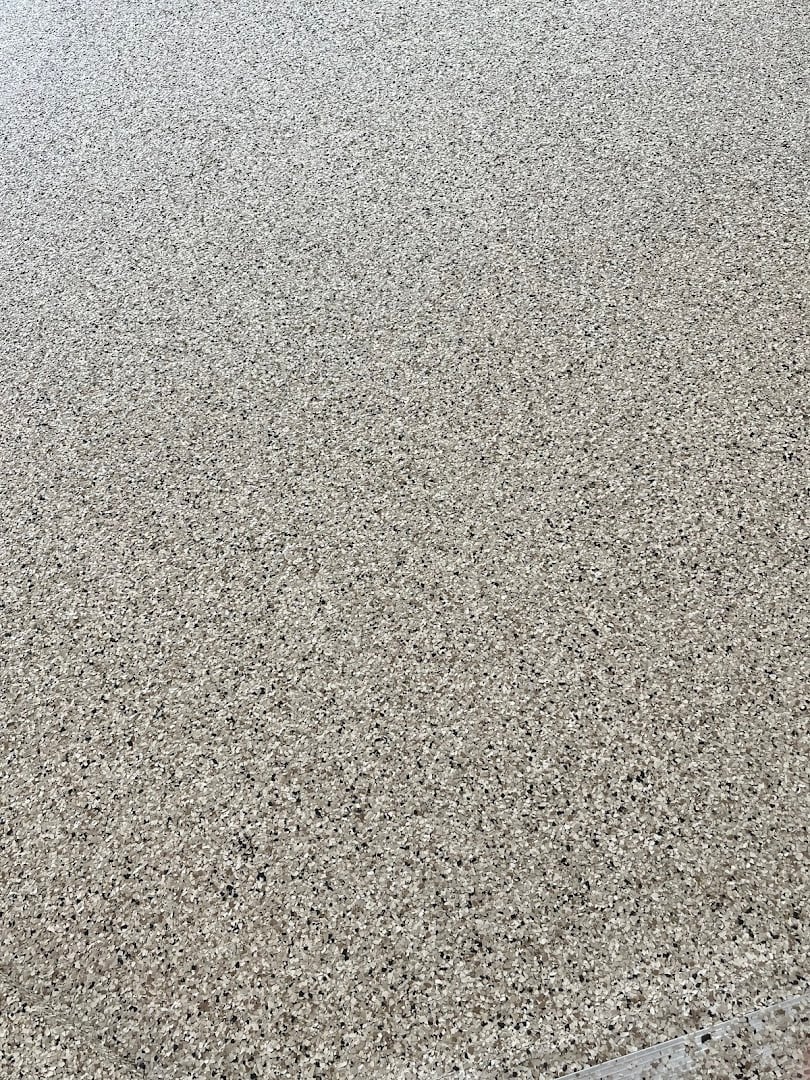
Polyaspartic coatings are a newer generation of floor coating technology, built on a polyurea-based formula. They're prized for their speed of application and superior chemical resistance. Most polyaspartic coatings can be applied and cured within a single day, allowing homeowners to use their garage again almost immediately.
Unlike epoxy, polyaspartic coatings are UV-stable, so they won't yellow or fade with sun exposure. This makes them particularly well-suited to Louisville, Kentucky, where garages often deal with intense summer heat and harsh winter freeze-thaw cycles.
How Do Polyaspartic and Epoxy Coatings Compare?
Which coating cures faster?
Polyaspartic coatings cure significantly faster than epoxy. While epoxy can take several days to fully cure, polyaspartic coatings are often ready for vehicle traffic within 24 hours. If you rely on your garage daily and can't afford a lengthy installation downtime, polyaspartic is the clear winner.
Which coating is more durable in Louisville's climate?
Louisville experiences hot, humid summers and cold winters, along with the temperature fluctuations of the Ohio Valley. Polyaspartic coatings handle these swings better because they remain flexible across a wider temperature range and resist cracking. Epoxy can become brittle in extreme cold, making it more prone to chipping when heavy tools or equipment are dropped on it.
Which coating costs less?
Epoxy coatings are generally less expensive upfront, which makes them attractive to homeowners working with a tighter renovation budget. Polyaspartic coatings carry a higher initial price tag, but the added durability and UV resistance often mean fewer touch-ups and a longer lifespan, which can offset the cost difference over time.
Which coating resists stains and chemicals better?
Both coatings offer solid resistance to oil, gasoline, and de-icing salts, common concerns for any Louisville garage. Polyaspartic coatings edge out epoxy slightly in chemical resistance, particularly against harsher substances like brake fluid, making them a smart pick for garages that double as workshops.
Decision Criteria: Which Coating Is Right for You?
- Choose polyaspartic if you want a fast turnaround, plan to use your garage as a workspace, or live in a home exposed to direct sunlight.
- Choose epoxy if your primary concern is cost, and you're comfortable with a slower installation and periodic maintenance to manage yellowing.
For most Louisville homeowners, the local climate tips the scale toward polyaspartic. The freeze-thaw cycles and intense summer sun that define our region's weather patterns put epoxy coatings to the test in ways that polyaspartic simply handles better.
Get Expert Guidance for Your Garage Floor Coating
Whether you're leaning toward the speed and durability of polyaspartic or the affordability of epoxy, working with an experienced installer makes all the difference. At ICON Concrete Coatings, we help Louisville homeowners choose and install the right garage floor coatings Louisville KY residents can count on for years to come. Reach out to our team for a free consultation and see which option fits your home, budget, and lifestyle best.
Frequently Asked Questions
How long do polyaspartic garage floor coatings last?
Polyaspartic coatings typically last 10 to 20 years with proper maintenance, thanks to their UV stability and resistance to cracking.
Is epoxy garage flooring a good long-term investment?
Epoxy can be a good option for homeowners on a budget, but it may require recoating sooner than polyaspartic, especially in garages exposed to sunlight or extreme temperature swings.
Can I install a garage floor coating myself?
While DIY kits exist for both epoxy and polyaspartic, professional installation ensures proper surface preparation and coating application, which significantly affects how long the floor lasts.
Does the Louisville climate affect which coating I should choose?
Yes. Louisville's humid summers and freezing winters make polyaspartic coatings a stronger choice due to their flexibility and resistance to cracking under temperature stress.
How much does a garage floor coating cost in Louisville, KY?
Costs vary based on garage size, floor condition, and coating type, but epoxy is generally the more budget-friendly option, while polyaspartic costs more upfront in exchange for faster curing and longer-lasting durability.