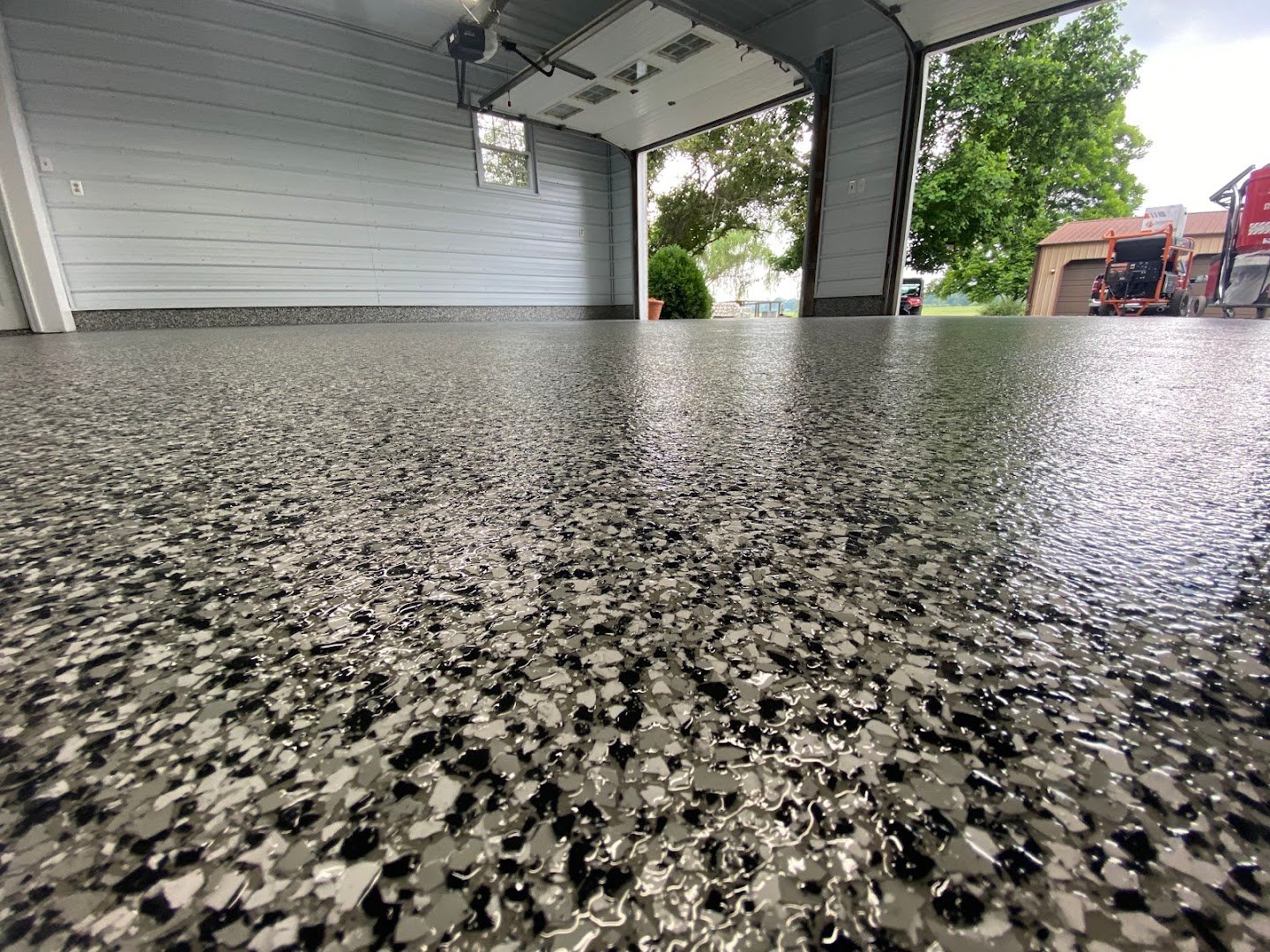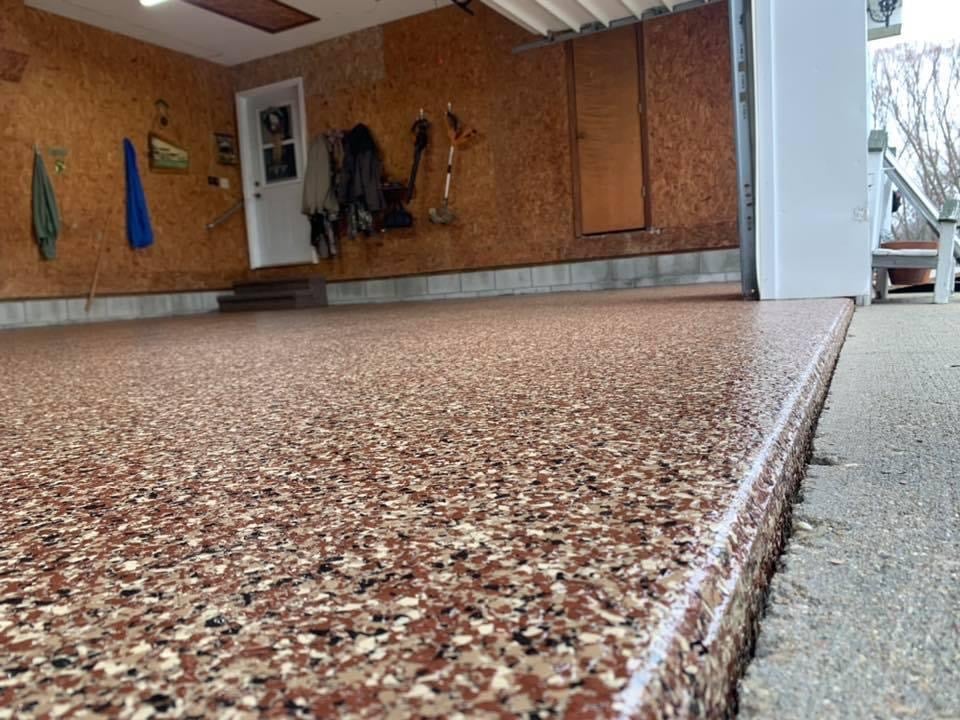

Quick Answer: Garage floor coatings create a chemical-resistant barrier that prevents oil, grease, and automotive fluids from soaking into concrete. For homeowners in Jasper IN, this means fewer stains, easier cleanup, and a garage floor that holds up to years of daily wear. ICON Concrete Coatings installs industrial-grade systems designed specifically for this kind of protection.
If you've ever tried to scrub a motor oil stain out of bare concrete, you already know the frustration. Porous concrete acts like a sponge, soaking up oil, grease, antifreeze, and brake fluid the moment they hit the surface. Once that happens, the stain is often there to stay.
That's exactly the problem garage floor coatings are built to solve. Rather than leaving your garage floor exposed to whatever drips, spills, or splashes land on it, a quality coating seals the concrete and creates a surface that chemicals simply can't penetrate. For homeowners and business owners in Jasper IN, where garages double as workshops, storage spaces, and parking for everything from lawn equipment to pickup trucks, that protection matters.
This post breaks down exactly how these coatings work, what makes them resistant to oil, grease, and harsh chemicals, and why ICON Concrete Coatings has become a trusted name for garage floor coatings Jasper IN residents rely on.
Key Takeaways
- Bare concrete is porous and absorbs oil, grease, and chemicals, leading to permanent staining and surface damage over time.
- Garage floor coatings use chemical-resistant resins like epoxy and polyaspartic to form a non-porous barrier that repels fluids and simplifies cleanup.
- ICON Concrete Coatings installs multi-layer systems tailored to Jasper IN's climate and the daily demands of residential and commercial garages.
Why Does Bare Concrete Stain So Easily?
Concrete is naturally porous. Under a microscope, its surface is full of tiny capillaries and air pockets that formed as the material cured. Those openings are convenient on-ramps for liquids.
When oil or grease hits unsealed concrete, it doesn't just sit on top. It works its way into those pores, and the deeper it travels, the harder it becomes to remove. Add Jasper's seasonal temperature swings, and that absorbed moisture can also contribute to surface pitting, cracking, and spalling over time.
This is why pressure washing or scrubbing a stained garage floor so often falls short. The stain isn't just on the surface. It's inside the concrete.
How Do Garage Floor Coatings Block Oil, Grease and Chemicals?
Garage floor coatings solve this problem by closing off the pathway chemicals would otherwise use to soak in. Here's how the process works.
Sealing the Concrete's Surface
A properly applied coating fills in the microscopic pores on the concrete's surface and cures into a dense, continuous layer. Once that layer is in place, liquids can no longer travel downward into the slab. Instead of absorbing, the surface repels.
Using Chemical-Resistant Resins
Not all coatings offer the same level of protection, and the resin type makes a significant difference. Choose epoxy if long-term chemical resistance and durability matter more than fast installation. Epoxy coatings are formulated to withstand prolonged contact with motor oil, transmission fluid, antifreeze, and common solvents without softening or discoloring.
Choose polyaspartic if a faster cure time and added UV stability matter more for your situation. Polyaspartic coatings cure in a fraction of the time epoxy requires, which shortens garage downtime, while still delivering strong resistance to automotive fluids and household chemicals.
Many professional installations, including those from ICON Concrete Coatings, combine both resin types in a multi-layer system to capture the benefits of each.
Creating a Non-Porous Topcoat
The final layer in a coating system is typically a clear topcoat, often polyurethane or polyaspartic-based. This layer adds an extra barrier against abrasion, UV exposure, and chemical contact, while giving the floor its glossy, easy-to-wipe finish.
What Makes a Garage Floor Coating System Last in Jasper IN?
Jasper IN sees genuine seasonal variation, from humid summers to freezing winter conditions, and that climate puts real demands on a garage floor. A coating system built for this environment needs to handle more than the occasional oil drip.
Multi-Layer Application
A single coat of paint-like sealer won't hold up to daily garage use. A professional system, like the ones ICON Concrete Coatings installs, typically includes a primer coat for adhesion, a base coat for color and body, and a topcoat for chemical and abrasion resistance. Each layer serves a distinct purpose, and skipping one shortens the system's lifespan considerably.
Proper Surface Preparation
Coatings fail far more often because of poor surface prep than because of the product itself. Concrete needs to be mechanically ground or shot-blasted to open its pores before coating, allowing the resin to bond properly. ICON Concrete Coatings handles this preparation step thoroughly, which is a major reason their installations hold up over time.
Resistance to Temperature Swings
Freeze-thaw cycles are common in Jasper IN winters, and they can cause bare concrete to crack or heave. A quality coating adds a flexible, protective layer that helps the surface resist the stress of expanding and contracting temperatures, reducing the risk of new cracks forming beneath the coating.
Why Choose ICON Concrete Coatings for Garage Floor Protection?
ICON Concrete Coatings specializes in installing garage floor coatings Jasper IN homeowners and business owners can depend on for years. Their process focuses on proper surface preparation, high-quality resin systems, and installation techniques suited to the region's climate.
Choose a professional installer over a DIY kit if you want a coating that resists peeling, yellowing, and chemical breakdown over the long term. DIY epoxy kits sold at hardware stores often use thinner, water-based formulas that lack the durability of professional-grade systems. For a garage that sees regular vehicle traffic, tool storage, or workshop use, that difference shows up quickly in how well the floor holds up.
Protect Your Garage Floor Before the Next Spill
Oil stains, grease marks, and chemical spills are often unavoidable in a working garage. What's avoidable is the lasting damage they cause to bare concrete. A professionally installed coating system turns your garage floor from a stain magnet into a surface you can wipe clean in minutes.
If your Jasper IN garage floor is showing stains, cracks, or wear, ICON Concrete Coatings can walk you through which coating system fits your space and how it will hold up against the specific chemicals and conditions your garage faces. Reach out to schedule a consultation and see what a properly sealed floor can do for your home or business.
Frequently Asked Questions
How long do garage floor coatings last?
A professionally installed epoxy or polyaspartic coating system typically lasts 10 to 20 years, depending on traffic levels, maintenance, and the quality of installation. Proper surface preparation significantly extends this lifespan.
How much do garage floor coatings cost in Jasper IN?
Costs vary based on garage size, the number of coating layers, and resin type, so it's best to request a quote from ICON Concrete Coatings based on your specific garage.
Can garage floor coatings be installed over cracked concrete?
Minor cracks can often be repaired and filled before coating application. Significant structural damage may need to be addressed separately before a coating system is installed.
Are garage floor coatings safe for heavy vehicles and equipment?
Yes. Professional-grade epoxy and polyaspartic systems are designed to withstand the weight of vehicles, tool chests, and workshop equipment without cracking or delaminating.
What's the difference between epoxy and polyaspartic coatings?
Epoxy offers strong chemical resistance and is a well-established option for long-term durability, while polyaspartic cures faster and adds better UV stability. Many installations combine both for maximum performance.